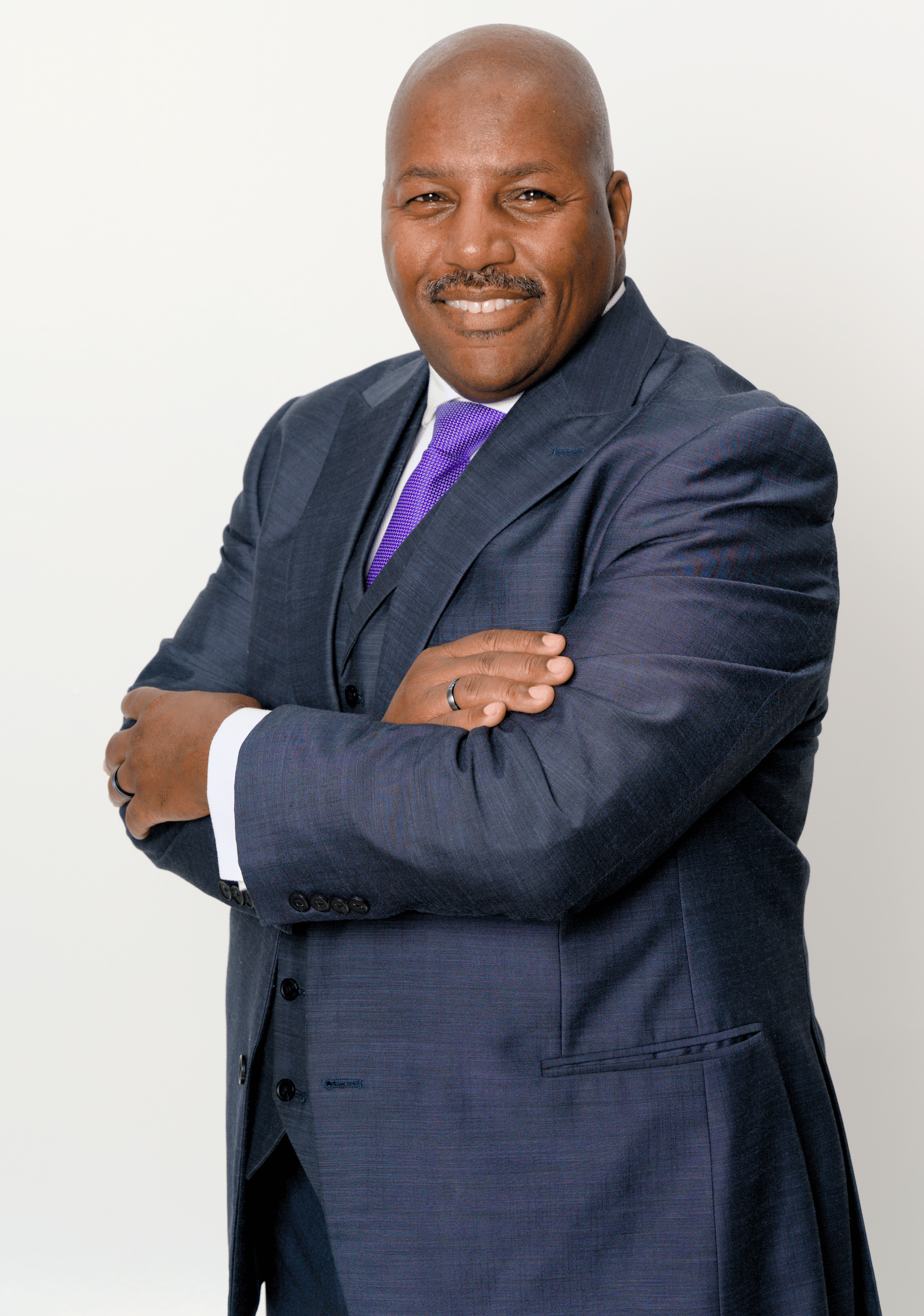
When it comes to Greek life and the Christian faith, Dr. Lyman Montgomery believes that they can coexist.
In Montgomery’s eighth self-published book, “Sacred, not Sinful: A biblical response to the Black Greek Letter Organization Debate,” he knew that in the middle of Black Greek Letter Organization’s (BGLOs) members' public denouncing and renouncing because of their Christian faith, there was a specific message to be shared. With that message, Montgomery decided to investigate what was placed on his heart and write the book that balanced the conversation between Christian faith and the participation of Christians in BGLOs.
Resolute Magazine had the chance to talk with Montgomery about his faith, the research placed into a deeply nuanced topic, and his experience as a participant in a BGLO.
You’ve covered a lot of ground in this book. You’ve done the work of interviewing from multiple angles: Pastors, members of BGLOs, and those who have renounced and denounced their Greek letters.
Yeah, it would be renouncing or denouncing your fraternity or sorority. Matter of fact, one story I have [in the book] she renounced, and now she’s returned because she has a new understanding.
If you see things as pure, they’re pure. If you see things as demonic, everything you think about and see is demonic. Some folks see demons in everything. I grew up Apostolic, I grew up with them folks. Everything was the devil.
Then, on the other extreme, you have those who operate under you can’t judge me. Who feel they can go and drink and fornicate and everything else.
Where’s the balance at? The Bible says a false balance is an abomination (Proverbs 11:1, NRSVue). What I try to do is bring balance to the conversation and to show the good, the bad, the ugly, and that, inherently in and of itself, fraternities and sororities are not bad. But to look at it as a mission field.
When I pledged, I made it clear that there were certain things I would not do. I would not drink. No one ever asked me to drink alcohol. I would not do anything that would dishonor my Christian faith. I was never asked to do anything to dishonor my Christian faith. I said I would not bow before any altars or anyone. I was never asked to. Because if I had to do that, I wouldn’t be in the fraternity. They said I didn’t have to do that.
What the book also does is it gives you about 100+ questions that I give the answers to. This is based on years of interviews and trying to understand why someone would renounce or denounce. It also breaks down the difference between renounce and denounce.
Renouncing simply means to retreat or to remove yourself, which is okay. Sometimes you do need to do that. Denounce means to declare publicly. That’s when you see people get on the internet and say, I’m no longer a member. They send letters to the council [and ask to] take my name off the roll. I respect those who say I’m in a different time of my life, I just got married, I don’t have time for [my BGLO]. Because life happens, but they still acknowledge their fraternity. They still acknowledge their sorority and the good work that they do.
Sometimes people try to make sororities and fraternities church. It was never created to be a church or a religious organization. And they [bring up the use of] brother, and say that [it is] only [used by] Christians. No.
It’s the same way Black folks say “Hey, brother” or “Hey, sister” even though we are not family. It is a way of connecting based on, in a lot of cases, our experiences. In some cases, our ethnicity.
In [public spaces], our way of saying I see you. I have a friend that says in some cases you’re the only flake of pepper in a sea of salt. [The acknowledgement] is a way of saying hey, I see you, bro.
It has nothing to do with trying to replicate the church.
What have you noticed in the difference between BGLOs and WGLOs holding race and faith in their fraternities and sororities? I know you mentioned white Greeks tend to more readily view Greek houses as missions, whereas with Black Greeks, there seems to have been an uptick in renouncing and denouncing their letters.
In many White Greek spaces, fraternities and sororities are often framed as mission fields. Faith is integrated, not interrogated. Bible studies happen openly. Members are rarely asked to renounce their letters to prove devotion to Christ. Christianity shapes behavior without demanding abandonment.
With Black Greeks, the tone has shifted.
There has been a rise in renouncing and denouncing letters, and often it is less about Scripture and more about unresolved pain. Hazing trauma. Disillusionment. Ego. Broken leadership. Instead of helping believers process those experiences with wisdom and healing, the church sometimes offers a single answer. Walk away and call it spiritual.
But the Bible models something different.
Joseph stayed in Egypt, wearing its symbols.
Daniel stayed in Babylon, working among astrologers and diviners.
Esther stayed in Persia, married into a godlike court.
Paul stayed engaged in Athens, quoting pagan poets.
In every case, God redeemed what was broken, reclaimed influence, and repurposed culture for His purposes.
Here is the tension worth prayerful reflection.
White Greeks are often encouraged to redeem their spaces. Black Greeks are often told redemption requires departure. That difference does not come from Scripture. It comes from fear, history, and misunderstanding.
The question is not whether BGLOs are perfect. They are not. The question is whether we trust the God of Scripture to still do what He has always done.
Redeem culture.
Reclaim identity.
Repurpose influence for His glory.
Perhaps the better question is not, should Christians leave their letters? Perhaps, it is this: What would it look like for Christians in BGLOs to live like Joseph, Daniel, Esther, and Paul, faithful to God, clear in conviction, and confident that God still works powerfully inside culture today? I often remind Christians within BGLOs that we are there to be both light and salt.
In your executive summary, you said that “BGLOs are strategic platforms for Christian missions.” Why missions? Why not simply a place where community and culture merge?
I see it as a mission because of intentionality. I experienced this at my own chapter at Ohio University, where [we came from all walks of life]. They knew that there was something different. When they found themselves in crisis, they knew they could call me.
I would not betray their trust, but I would give them a prayer or a scripture. That’s where, again, you can use that relationship of brotherhood or sisterhood to introduce or reintroduce them to Jesus and say, “Let’s pray.” I don’t have all the answers, but we can pray about it, and I’ll stand with you. It wasn’t just about church on Sunday. They saw you live this thing out.
We had our 50th-year chapter anniversary, and I attended and received an award. Because people remembered the young preacher boy. Now, did I lose my mind when I first crossed? I sure did. I only had one bad quarter in college. And it wasn’t because I was in a fraternity. It was because I was sheltered. I was a preacher boy. What I wasn’t prepared for after I crossed [was that] I went from being the young preacher boy to a Sigma.
I’ll be honest, I was a virgin. After I crossed, I got introduced to extracurricular activities [thinking], this is what I was missing out on?! But it was Divine 9 family, that saw me going down the wrong path, and this is what they did.
The head of the scholarship division, while on the radio, said Lyman, if you don’t get your act together, you’re going home. I was barred from every party. Even the Que’s wouldn’t let me into their parties… That’s what I’m talking about, a community. They knew that I held something special. And they were not going to allow [me] to throw away what God put in me. And they came and got me.
My best friend, a Delta, Le-Anne Harris, told me I can’t be your friend if this is you now. I don’t like this version of you.
It wasn’t [the fraternity] because the same ones I led to Christ were the same ones that said hey, man, what’s going on with you? If I had not pledged Phi Beta Sigma, it still would’ve happened because it was all new to me. It was all this newfound freedom.
That’s why I say it’s a mission field, because when I lost my way, there were brothers, in the fraternity, Robert Saunders, God rest his soul, Darwin Lofton, who came and got me. I can go on: there were a number that came and got me and said there’s something in you, and we want to make sure you graduate. More importantly, we know the Spirit of God in you, and this ain’t it.
After that, I returned home.
…I can’t blame that on the fraternity. If I blame that on the fraternity, then it would be disingenuous because the same fraternity brothers were the ones, Darwin and Robert, that came and got me and said bro, this ain’t what we’re about.
What would it look like for Christians to hold a more balanced view of BGLOs?
When Christians talk about Black Greek Letter Organizations, the conversation often jumps too quickly to conclusions. Either full defense or full rejection. But Scripture gives us a better way.
So let me share three Old Testament examples and one New Testament example to help us approach BGLOs with a more balanced, biblical lens, using the Bible as our primary source. Not to excuse sin. Not to baptize every tradition. But to understand how God has historically worked with His people inside cultural systems that were imperfect, complicated, and often misunderstood.
First, consider Joseph.
Joseph did not just work in Egypt. He became a visible representative of its power. Pharaoh placed his signet ring on Joseph’s hand, a ring that symbolized Egyptian authority and would have carried imagery connected to their gods. Joseph was clothed in garments of office that reflected Egyptian status, culture, and religious worldview. Even Joseph’s burial followed Egyptian customs, which were deeply tied to their spiritual beliefs.
Yet Scripture never accuses Joseph of idolatry.
God redeemed Joseph’s suffering, reclaimed his position, and repurposed Egypt itself to preserve life. Joseph wore the symbols of the system, but he did not worship the system. His allegiance remained with God, and God used him anyway.
That matters when we talk about BGLOs.
Next, look at Daniel.
Daniel was educated in Babylon alongside astrologers, diviners, and magicians. He learned their language, studied their literature, and served in their government. Babylon practiced things Scripture does not affirm. Yet Daniel did not renounce his education or abandon his role. He drew spiritual boundaries while remaining faithful and present. God reclaimed Daniel’s faithfulness and repurposed his influence so that kings recognized the authority of Daniel’s God. Daniel shows us that proximity to questionable practices does not automatically equal participation in them.
Now consider Esther.
Esther lived in the Persian court and was married to a king who viewed himself as godlike. She lived inside a system shaped by power, ego, and idolatry. God did not remove her from that environment. He redeemed her identity, reclaimed her voice, and repurposed her position to save an entire people. These Old Testament stories remind us that God has often chosen to work through His people inside cultural institutions, not outside of them.
Now, let me move to the New Testament with Apostle Paul in Acts 17 as an example.
Paul stands in Athens, surrounded by idols, philosophers, poets, and playwrights. Instead of rejecting the culture outright, Paul engages it. He quotes pagan poets and uses their language as a bridge to the gospel. Paul does not affirm their gods, but he redeems their words, reclaims their ideas, and repurposes their culture to point people to Christ.
So, what does all of this have to do with BGLOs? A balanced Christian view of BGLOs recognizes that God has always redeemed culture, reclaimed what was misdirected, and repurposed influence for His glory. It means we stop assuming that symbols, rituals, or organizational structures are automatically worship. It means we stop treating departure as the only faithful response.
Balance does not mean uncritical acceptance. It means discernment. It means asking how faith shapes participation, where boundaries belong, and how Christ is honored through integrity, service, and leadership. God does not waste culture. He transforms it.
What set you out on this path?
It goes back to about 7,8 years ago. The first time I heard someone talking about denouncing or renouncing their BGLOs. I listened, and the person in tears happened to be a member of Phi Beta Sigma, which is my fraternity. He was in his car, and he was talking about all the great memories that he had being a member of Phi Beta Sigma, but because he had become a Christian, he felt that the two of them could not coexist. That some of the pledge process that he had gone through did not appear conducive to his newfound Christian belief.
Some of the pledge process, more specifically, some of the hazing, which, by the way, has never been part of the Divine 9. Hazing, as we understand it now, didn’t really come into existence until GIs returned from WWII in the 1940s and 50s, and they brought this kind of bootcamp mentality of walking in lines, the physical aspects of pledging. Prior to that, people were selected based on merit, scholarship, community service, and individuals who were part of the community, and those who were. There’s an African term called “Sankofa,” which means to reach back. When it comes to the Divine 9, all of them have some aspect of brotherhood, sisterhood, scholarship, and service. Which is what we’re built upon.
That got me thinking, “Why would he feel the need to leave?”
Then, about 3 years ago, the lid just blew off. And every time you turned around, somebody was denouncing, renouncing… And, 2 years ago, I had the idea to have a webinar. What I wasn’t seeing was a situation where both sides had an opportunity to speak. So, I invited those who were pro-BGLOs and those who were opposed to BGLOs. It was a great dialogue, and the response was, “How come there aren’t more respectful dialogues where both sides are represented?”
I kept waiting for someone to write about this. And I looked, and nobody from the Christian community was speaking on this subject. If no one is doing a deep dive investigation into this, maybe that’s a sign from God that it’s on me to do it. For about 18 months, I researched and interviewed. I probably watched every denouncement and recantation video that’s out there. That’s what led to the book “Sacred, not Sinful: A biblical response to the Black Greek Letter Organization Debate.”
There’s an interesting dichotomy going on. If you look at what’s known as the white Greek letter organization, they’re experiencing what’s known as a revival of frat houses. A Christian news network did a study on how these white fraternities and sororities are using their fraternity [and sorority] houses as revival houses. Yet, when looking at the National Pan-Hellenic Council, which is made up of the Divine 9, or which I prefer to call the Black Greek Letter Organizations, there seems to be this retreat from fraternity and sorority based on what I call the proof framework.
With the PROOF framework, I looked at all of these different objections. I wanted to create a framework that would help the average reader understand what are the problems they have with Black Greek Letter Organizations.
PROOF is the framework used to look at the Pledge Process, Rituals, Oath, Obscurity, and Founders for the Divine 9.
For you, was there something that you learned during research or interviewing that shocked you?
Yes! What shocked me was two things. One was the number of people who had the same questions that I had, and had been waiting for something like this. The second one was the amount of hypocrisy that you see from well-intentioned Christians.
I was running with my Phi Beta Sigma sweatshirt on. A brother approached me [in a Nike sweatshirt and Nike shoes]…He told me hey man, you know you can’t wear that, that’s demonic. And I chuckled. He said hey I’m trying to stop you from going to Hell. I chuckled, and I said well if I’m going to Hell for wearing my Greek letters, are you going to Hell for wearing your Greek goddess?
Nike is the goddess of victory, and the swoosh is her wing. He looked at me like I was crazy.
That’s what I mean by hypocrisy.
Writer Bio:
Shonette Reed is the editor of Resolute Magazine.